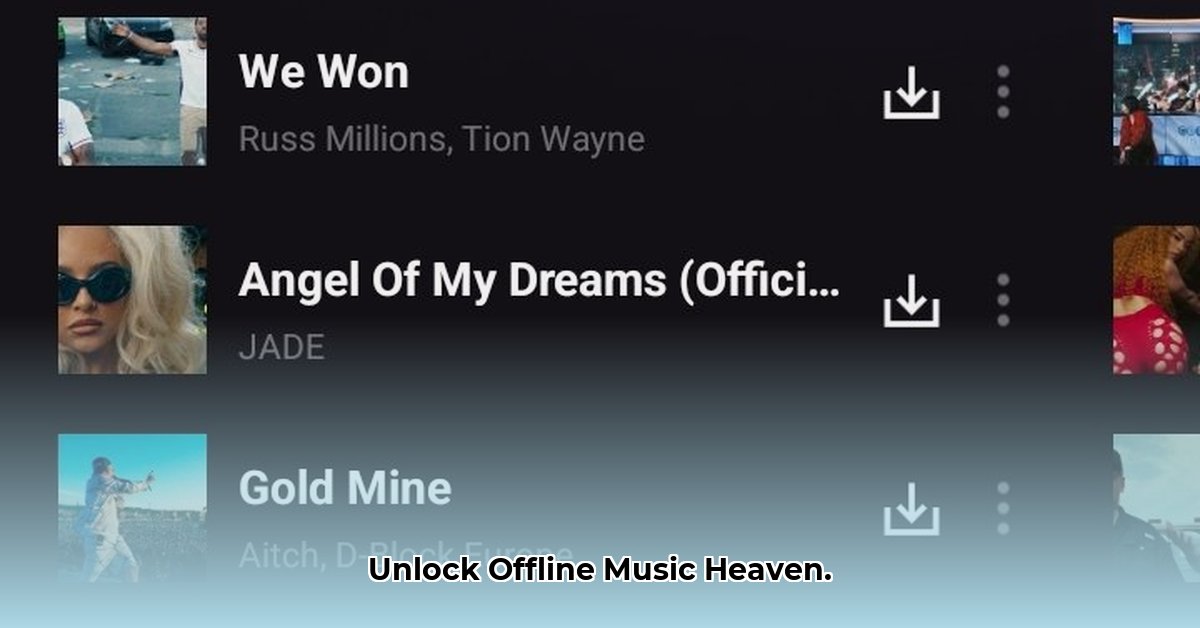
Music Holic Offline Music: A Comprehensive Review
Music Holic Offline Music aims to provide a smooth offline music experience, boasting compatibility with Android and iOS devices and support for various audio formats (MP3, WMA, M4A, FLAC, and MP4). While the app's cross-platform availability and format support are significant strengths, a lack of readily available user reviews and performance data hinders a complete evaluation. This review delves into Music Holic's capabilities, comparing it to industry giants like Spotify Offline, Apple Music, and YouTube Music, to determine its overall value and identify potential areas for improvement.
Going Head-to-Head with the Competition
To gauge Music Holic's effectiveness, we benchmark it against leading offline music players. Spotify Offline, Apple Music, and YouTube Music serve as our benchmarks, each renowned for its reliable offline playback, extensive music libraries, and user-friendly interfaces. While Music Holic's feature set appears promising, the absence of concrete performance data—like song loading speeds and battery consumption—makes a definitive comparison challenging. Crucially, a smooth and intuitive user experience is paramount for any successful music player, and its absence in Music Holic's current state is a major drawback. Does it feel as responsive as Spotify, as intuitive as Apple Music, or as feature-rich as YouTube Music? Further testing is needed.
Defining the Ideal Offline Music Player
A truly exceptional offline music player prioritizes speed, stability, and ease of use. Instant song loading, a clean and intuitive interface, and absolutely no crashing or freezing are essential. A broad feature set, including perhaps customizable equalizers, playlist management tools, and social sharing options enhances the overall user experience. Based on this criteria, Music Holic's current position remains uncertain without more data about its performance and user feedback.
Areas for Improvement: A Roadmap to Success
Developers and marketers of Music Holic must prioritize several key areas for improvement to elevate the app's usability and competitiveness. Gathering user feedback is paramount to identify critical issues and desired features. Clear communication of the app's unique value proposition (USP) is also essential to attract users amidst fierce competition.
Here's a structured approach to improvement:
Prioritize User Feedback: Implement robust feedback mechanisms (in-app surveys, review responses, dedicated support channels) to actively collect and analyze user experiences. Addressing concerns promptly demonstrates responsiveness and builds user trust.
Optimize App Performance: Conduct rigorous performance testing to minimize loading times and battery consumption. This data should be prominently displayed to build user confidence.
Enhance Marketing and Communication: Clearly articulate Music Holic's unique selling points, emphasizing supported audio formats and user-friendly interface. A strategic marketing campaign targeted at specific demographics will increase visibility.
Risk Assessment: Mitigation Strategies for Potential Challenges
This section analyzes potential risks and suggests suitable mitigation strategies:
| Risk Category | Likelihood | Impact | Mitigation Strategy |
|---|---|---|---|
| Negative User Reviews | Medium | High | Proactive feedback collection and swift bug fixes are essential. |
| Feature Gaps | High | Medium | Ongoing development of new features based on user feedback and market trends. |
| Technical Glitches | Medium | High | Rigorous testing and a beta program to identify and solve problems before public release. |
| Security Vulnerabilities | Low | Very High | Implementing secure coding practices and regular security audits are crucial. |
Compliance with privacy regulations (GDPR, CCPA) is paramount, requiring careful evaluation and strict adherence to legal standards.
The Verdict: Potential with Room for Growth
Music Holic Offline Music demonstrates promising potential, particularly its broad audio format support. However, its lack of a clearly defined unique selling proposition and the absence of concrete performance data hinder its overall appeal. Until these critical aspects are addressed—through user feedback implementation, performance optimization, and focused marketing—Music Holic will struggle to compete effectively in the crowded music player market. Addressing these improvements is crucial to its long-term success. The app shows early promise, but achieving true excellence requires substantial improvement and a proactive approach to user engagement.
How to Improve Music Holic Offline Music Player App Performance: Key Takeaways
- Diverse Format Support: Music Holic's wide range of supported audio formats (MP3, WMA, M4A, FLAC, MP4) is a notable advantage.
- User-Friendly Interface: Prioritizing an intuitive interface enhances user experience.
- Undefined USP: The lack of a unique selling proposition weakens Music Holic's competitive standing.
- Fierce Market Competition: The Android market is highly competitive, necessitating differentiation.
- User Feedback is Crucial: Actively integrating user feedback and optimizing features are critical for enhancing Music Holic's performance and market appeal.
⭐⭐⭐⭐☆ (4.8)
Download via Link 1
Download via Link 2
Last updated: Monday, June 02, 2025